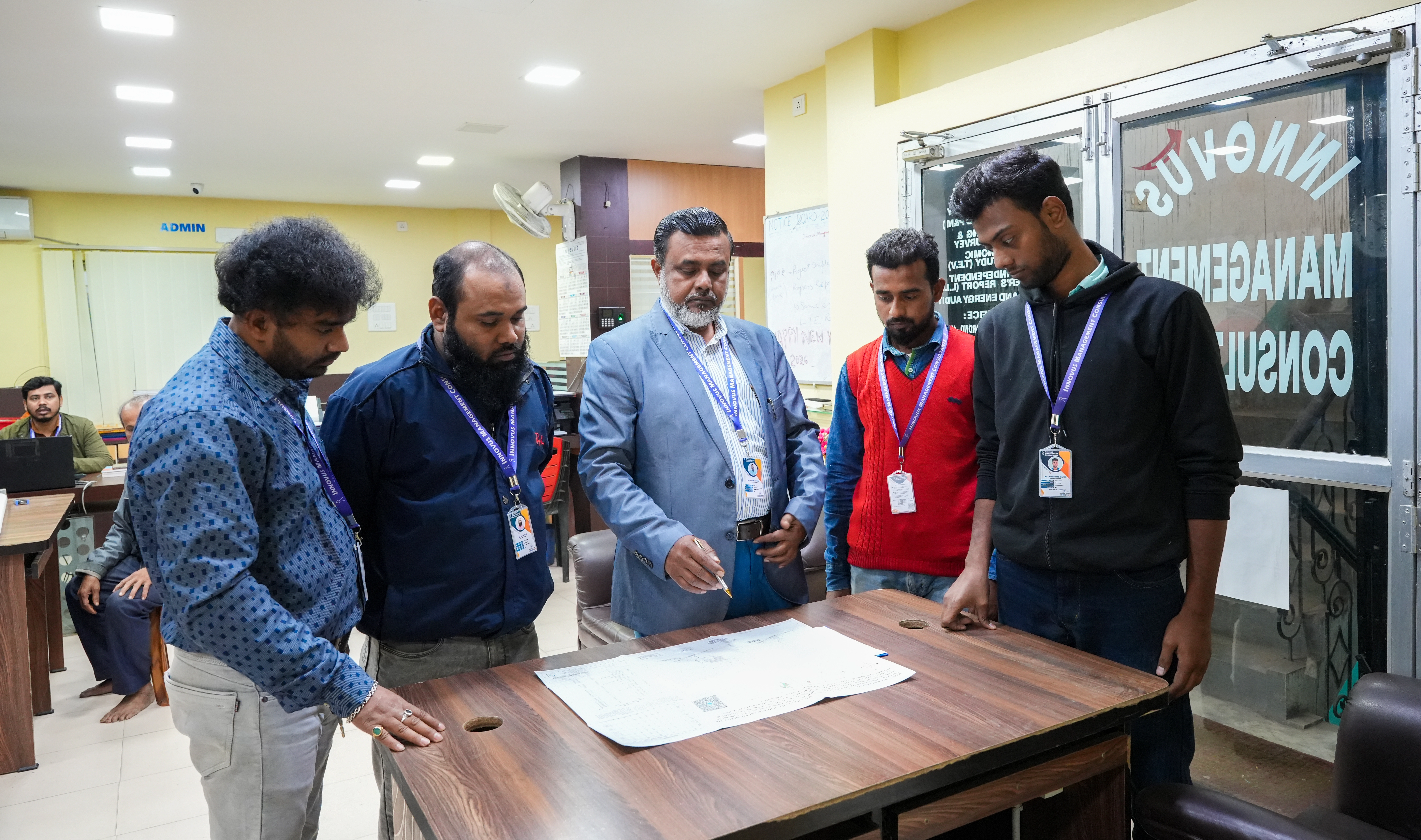
Project execution and surveying are critical components of successful project management in various industries, from construction to engineering, infrastructure development, and environmental management. Here's a breakdown of each aspect:
Project Execution:
1. Planning and Preparation:
Defining project objectives, scope, and deliverables.
Creating project schedules, timelines, and budgets.
Allocating resources and establishing communication channels.
2. Implementation:
Procuring materials, equipment, and manpower as per project requirements.
Managing logistics, site operations, and subcontractors.
Ensuring compliance with safety, quality, and regulatory standards.
3. Monitoring and Control:
Tracking project progress against milestones and KPIs.
Conducting regular inspections, quality checks, and audits.
Managing changes, issues, and risks effectively.
4. Communication and Reporting:
Facilitating regular meetings and updates with stakeholders.
Providing timely reports on project status, performance, and budget variance.
Addressing feedback and resolving conflicts proactively.
5. Completion and Handover:
Finalizing project deliverables and documentation.
Conducting inspections, testing, and commissioning activities.
Handing over the project to the client and ensuring a smooth transition.
Surveying:
1. Land Surveying:
Conducting topographic surveys to assess terrain, elevation, and natural features.
Performing boundary surveys to determine property lines and land ownership.
Creating land maps, charts, and legal descriptions for regulatory compliance.
2. Engineering Surveying:
Providing precise measurements and data for engineering design and construction.
Conducting site surveys to determine the suitability of land for development.
Monitoring construction progress and ensuring accuracy in layout and dimensions.
3. Environmental Surveying:
Assessing environmental factors such as soil quality, water resources, and vegetation.
Conducting environmental impact assessments (EIAs) and compliance surveys.
Implementing mitigation measures and sustainable practices based on survey findings.
4. Geodetic Surveying:
Utilizing geodetic techniques to establish accurate coordinates, distances, and elevations.
Conducting geophysical surveys for geological exploration and mapping.
Supporting GIS (Geographic Information System) applications and spatial data analysis.
5. Hydrographic Surveying:
Surveying bodies of water, coastlines, and underwater features.
Collecting data on bathymetry, currents, tides, and marine habitats.
Supporting marine navigation, dredging operations, and coastal management.
Integration:
Project execution and surveying often overlap and complement each other in various projects.
Surveying data is crucial for accurate project planning, design, and implementation.
Surveyors work closely with project managers, engineers, and other stakeholders throughout the project lifecycle.
Conclusion:
Effective project execution and surveying are essential for achieving project objectives, ensuring quality, and minimizing risks. By integrating these processes seamlessly, organizations can deliver successful projects that meet client expectations, regulatory requirements, and industry standards.